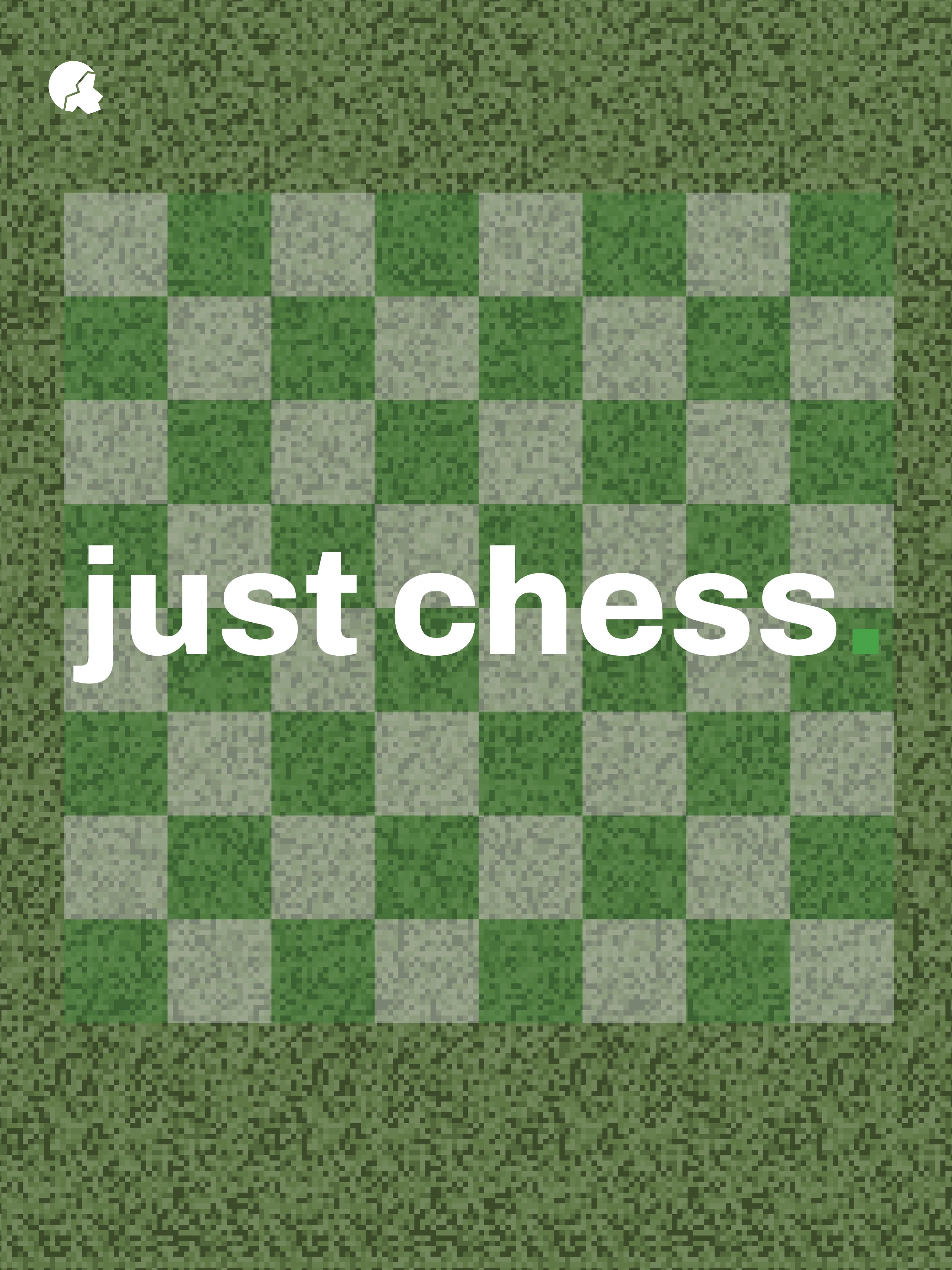
A stereogram is that field of coloured noise from the nineties, the Magic Eye, where a three-dimensional figure surfaces if you unfocus your eyes the right way. The information is fully there, in front of you, the whole time. The only thing separating those who see it from those who don't is knowing how to look.
Just Chess is an ordinary online chess game. Clean board, clocks, captured pieces, three modes: same device, against the computer, or online through an invite link. Nothing about it announces that anything else is going on.
The background is an animated autostereogram, tinted with the board's own colours. Hidden inside it, invisible to anyone who doesn't know how to look, is the best move for the current position according to Stockfish (the strongest chess engine in the world), recalculated every turn. It is not one player's bonus and it is nobody's cheat: it is available to both, all the time, from the very first move. The advantage is not access to the information. It is the ability to see it.
What does that do to the idea of cheating? If the answer is on screen, exposed, equal for both sides, and almost nobody can read it anyway, is that an unfair advantage, or simply another skill of the game?